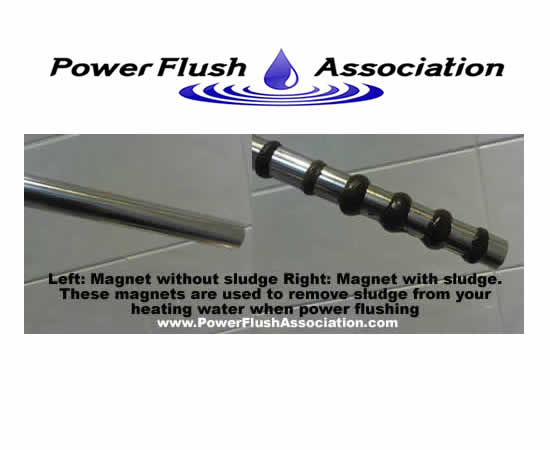
As already noted, Power Flushing is a cleaning procedure to remove sludge from the inside of the pipes and radiators that make up your central heating system. Power Flushing isn’t just using a jet of pressurised water; effectiveness is increased using chemicals and magnets. When the flushing process is complete, the final step is to add a dose of “inhibitor” to the water in the central heating system, as this helps to prevent sludge reappearing.
What is sludge?
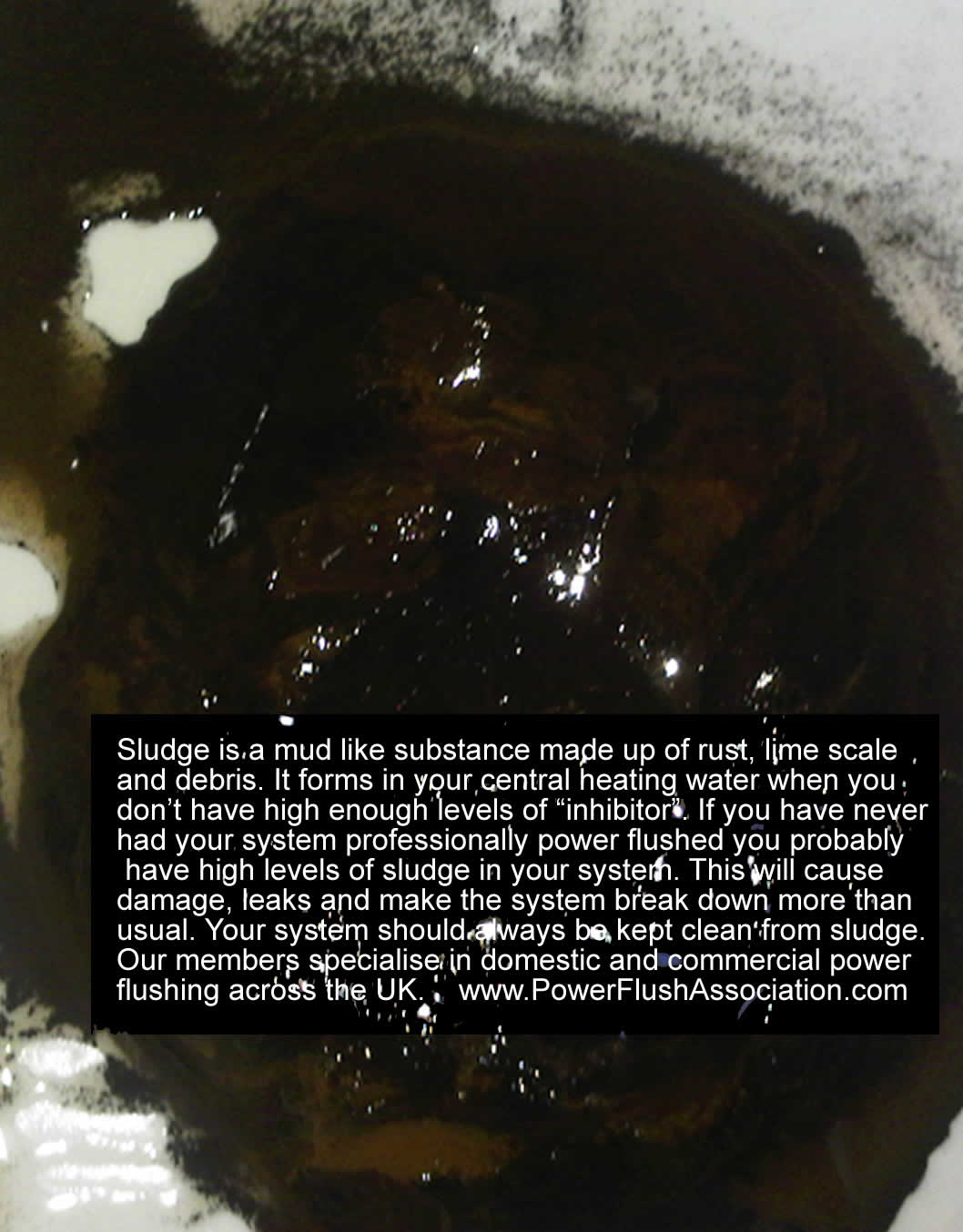
Sludge is the name given to the debris that builds up in a central heating system – in many cases, it’s largely made up of rust (iron) or other products of corrosion, and other debris that settles down from the water, or is scoured from the pipes, radiators and boiler.
Note that if you have copper pipes (a non-magnetic metal) but a magnet sticks to the pipes (do not attempt near a joint, as the solder may be made from a magnetic material), there is a good chance that you’ll benefit from having a power flush. Being in an area with very hard water can also be a sign that a Power Flush can help with your heating system’s efficiency.
Sludge can have a damaging effect on your central heating system. It prevents radiators from heating up fully, can damage burners, valves and other parts of the central heating system, as it is abrasive. However, there are different grades of sludge and the situation will worsen over time if no action is taken to remove the sludge. The muddy, sandy sludge particles can begin to clump together, making larger flakes that are big enough to cause blockages, and gum up moving parts, causing system malfunctions. Boilers are more likely to break down if there are significant amounts of sludge and debris circulating around the system. If only the effects are dealt with, the same problems can occur again and again and lead to recurring engineer callouts.
Why should you get a Power Flush?
Cleaning the system internally prevents further damage that could have been caused by the debris that the power flush has cleared out. If the boiler’s heat exchanger has already been compromised and is gummed up with sludge, an expert can assess whether that particular model can be cleaned out effectively by power flushing – some may be beyond help.
Make sure you engage only qualified professionals to make an assessment. Good plumbers and heating engineers should have access to the necessary equipment and supplies, have appropriate knowledge to assess whether a power flush will be effective, and will be familiar with the procedure. Depending on your heating system’s layout and how much sludge has built up, a power flush can take up to a full day. This should also give you some indication of the likely cost.
It’s not enough to simply drain the system down and refill it instead of power flushing, as this will only clear the lightest sludge particles that are still in suspension in your central heating water. The clue is in the word “flush” – the bigger particles need to be forced through the pipes and out under pressure.
While it can help, the addition of a chemical to loosen the sludge beforehand won’t replace the need for a power flush.
Be aware also that a power flush alone may not bring your central heating back to full operating status. There may be other remedial work that your plumber can recommend. There is a small chance that, if the initial plumbing of the central heating system wasn’t done properly, a power flush can cause a leak where joints are already faulty. Power flushing can’t fix leaks – but having one done can prevent leaks that might otherwise occur in future.
Tips
When a new boiler is installed, it’s always strongly recommended to flush out the pipes before connecting the new boiler up; inhibitor should be added to help prevent the formation of sludge; and in many cases, the plumber will recommend that a magnetic cleaning system be incorporated in to your central heating pipework to help keep the pipes, radiators and heat exchanger clear of sludge build-up in future.
We’ll be happy to discuss your requirements over the phone and can promptly book an engineer visit to make an assessment.
Power Flush